

Stretch Marks
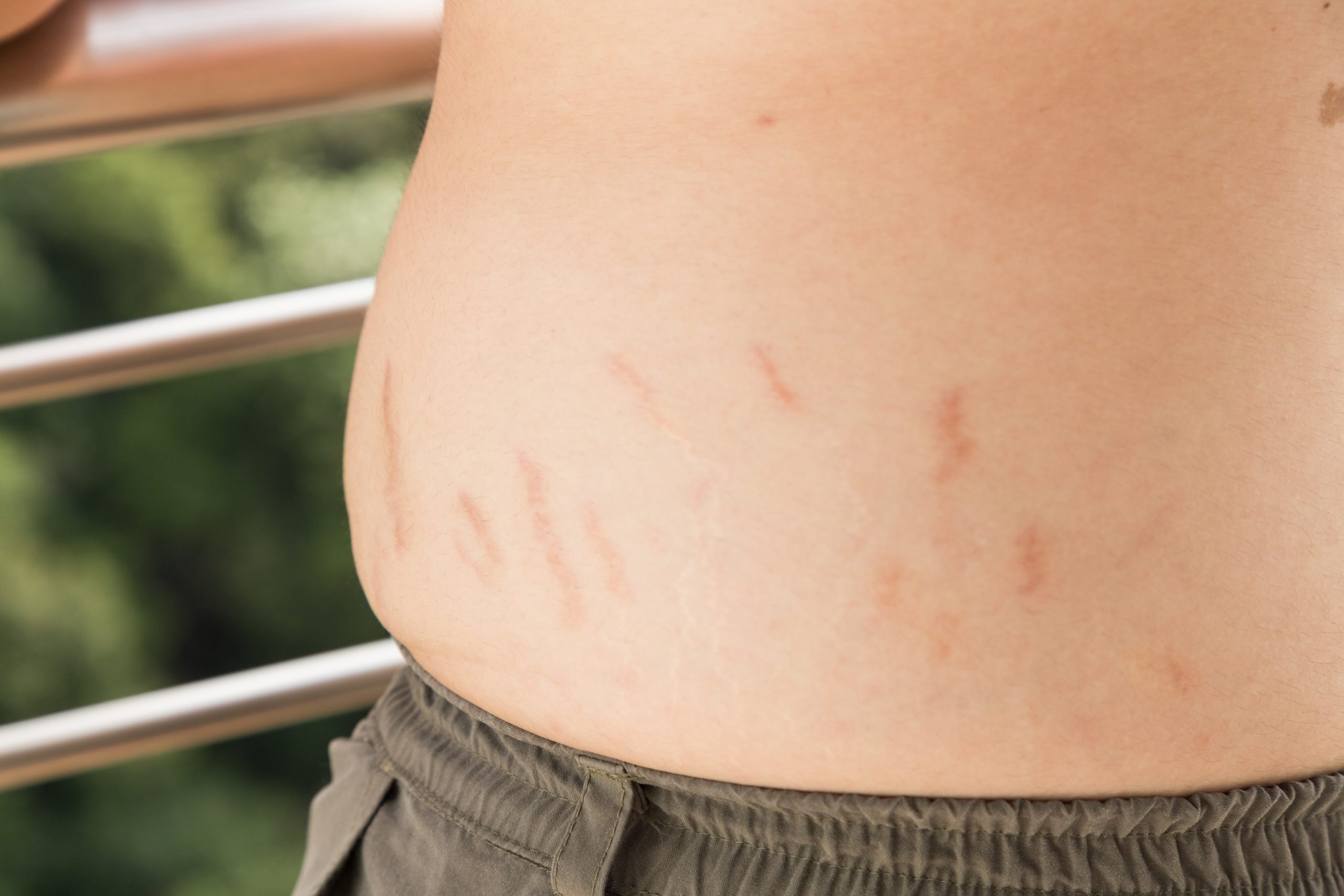
Contact Us TodayFollowing rapid growth and stretching of the dermal layer of the skin stretch marks can form. These are common in pregnancy or during adolescence when teenagers grow rapidly. They can also occur after weight gain. Over time they often fade to a white appearance but sometimes the purple appearance persists.
Treatment with SkinPen Microneedling can reduce the appearance of stretch marks through encouraging cell turnover and renewal.
Stretch marks can be upsetting and affect self-confidence at any age as patients often feel they can’t wear the clothes or swim wear they would like to. Often patients have tried many different creams to try to treat their stretch marks before they come to optimise aesthetics and feel fed up that nothing has really worked for them.
Treatments are focused on promoting cell turnover and lifting pigmentation to brighten the skin to reduce this appearance.
Treatment options include:
- Medical grade skin care focused on brightening the skin to support in clinic treatments.
- Treatment with SkinPen Microneedling can reduce the appearance of stretch marks through encouraging cell turnover and renewal.
- Polynucleotide injections to brighten and even out pigmentation of the skin.

What will happen during a consultation?
Whether your consultation is virtual or face to face is essential to identify the areas of concern, what you have tried so far, potential causes, medical history and any allergies or previous reactions to past treatments, current medications and lifestyle and nutrition. Dr Bye will discuss all these areas with you and examine your skin to gain an overall picture of your condition and concerns and how best to move forward for you. Treating skin conditions such as stretch marks involves a personalised and holistic approach for the best results. Following your consultation, Dr Bye will put together a treatment plan for you.
Which treatment option is best for me?
Every patient is different. Your treatment will very much depend on what is discussed and seen during your detailed consultation. For stretch marks, Dr Bye often uses SkinPen Microneedling as a great option alongside supportive and appropriate skin care.
Why choose Dr Bye?
As both a GMC registered GP and JCCP registered aesthetics doctor with additional training in cosmetic dermatology, Dr Bye’s approach to treating skin conditions such as stretch marks is holistic. Her extensive aesthetic training and microsurgical experience enables her to gain results that are safe and personalised with minimal or no discomfort.
As both a GP and aesthetics doctor her holistic approach allows her to use multiple modalities to treat your stretch marks from SkinPen Microneedling to injectable treatments such as Polynucleotides.
She will discuss fully any concerns you have prior to treatments and will be open and honest about how to achieve the best results for you.
Frequently Asked Questions
What causes stretch marks?
Stretch marks (striae) form when the skin’s elastic fibres and collagen are rapidly stretched or disrupted, causing dermal tearing and altered pigment. Common triggers are rapid growth during puberty, pregnancy, rapid weight gain or loss, intensive muscle building, and hormonal changes that weaken connective tissue. Genetic predisposition, corticosteroid use, and certain medical conditions can increase risk.
Can stretch marks go away?
Stretch marks usually fade but rarely disappear completely. Early, pink or red striae (striae rubra) are more responsive to treatment and often lighten and soften over months, while older white or silvery marks (striae alba) become permanent in structure but can be visibly improved. Timely intervention gives the best cosmetic outcome.
How to remove stretch marks?
Meaningful reduction is achieved with a combination of in‑clinic and targeted home care:
- Medical‑grade skincare containing retinoids and growth‑factor supportive ingredients to improve cellular turnover and tone.
- Microneedling to create controlled micro‑injuries that stimulate collagen and elastin remodelling and improve texture and pigment.
- Polynucleotides as injectable biostimulators can enhance dermal regeneration and long‑term skin quality when combined with needling.
A staged plan tailored to mark age and skin type yields the best, most durable improvement.
Does losing weight help with stretch marks?
Losing weight does not remove existing stretch marks and, in some cases, can make them appear more noticeable as overlying fat recedes and skin thins. Weight stabilisation, gradual weight loss, and early use of medical‑grade skincare plus microneedling and polynucleotides help improve appearance after weight changes.
What age is most common for stretch marks?
Stretch marks most commonly appear during periods of rapid growth or hormonal change: adolescence (puberty) and pregnancy are peak times. They can also develop during rapid weight gain or intensive bodybuilding at any age.
Does drinking water reduce stretch marks?
Adequate hydration supports overall skin health but drinking water alone will not remove stretch marks. Hydration helps skin elasticity and healing capacity, so combine good hydration with medical‑grade topical care and in‑clinic treatments like microneedling and polynucleotide therapy for visible improvement.
What is the best way to avoid stretch marks?
The best prevention focuses on minimising rapid skin stretching and supporting dermal resilience: maintain steady, gradual weight changes, use medical‑grade skincare that supports barrier and collagen health during high‑risk periods (pregnancy, puberty, rapid training), avoid unnecessary systemic steroids, and seek early professional treatments (microneedling and polynucleotides) at first signs of striae to reduce long‑term visibility.